


👋 Hi and welcome to today’s edition of Venture Radar - where we uncover real internet businesses making real money, and break down how they do it. Here’s today at a glance -
Steal this ideas: AI personal trainer for executives + AI for normal people
Side hustles & passive income: $1K faceless AI music channels, garage rentals & iPhone flipping
Real businesses: $400K travel guides, $4.3M porta-potties & $35K ATM cash flow
🚀 Big announcement: We just launched Venture Radar Premium
Over the past few months, many readers have asked for deeper breakdowns, practical templates, and more actionable resources.
So we decided to build something for founders, indie hackers, and operators who want to go beyond surface-level content.
Today, we’re launching Venture Radar Premium.
A premium research membership where we reverse-engineer underrated internet businesses and provide the playbooks, templates, and ideas you can use to build your own.
As a premium subscriber, you’ll get:
2-3 premium deep dives every week
Curated playbooks and guides on marketing, distribution, and build in public
Practical templates for idea validation, competitor analysis, and market research
A growing business idea database updated every week
Private Substack Chat community with other builders
Special launch offer: Save 25% for the next 5 days.
If you’ve ever read one of our issues and thought, “I want more detailed breakdowns like this,” Venture Radar Premium was built for you.
We promise, you will see more unique and in-depth research on how real people are building underrated businesses, generating meaningful income, and creating long-term wealth - often without raising money or building large teams.
This is the next evolution of Venture Radar, and we’re excited to build it with you.
🥷 STEAL THIS BUSINESS IDEA
Steal this idea: AI personal trainer for executives.
High-performing executives are willing to spend serious money on anything that helps them stay healthy, sharp, and energetic. They already pay for trainers, nutritionists, executive coaches, and longevity tests. What they want is better results with less friction.
The opportunity? An AI-powered personal trainer built specifically for busy executives.

Instead of generic workout plans, the product creates a personalized fitness system based on travel schedules, calendar availability, sleep, recovery, and health goals. It adjusts automatically when meetings run late or flights disrupt routines.
The experience could include:
Personalized workout and nutrition plans
Daily accountability and check-ins
Calendar-aware scheduling
You could start as a high-touch service. Use AI behind the scenes to help a handful of executives get better outcomes, then turn what works into software.
Pricing can be premium from day one. Executives already spend thousands each year on health, and they care far more about consistency and results than saving a few dollars.
Over time, expand into stress management, sleep optimization, bloodwork analysis, and longevity recommendations.
This is much bigger than a typical fitness app. You’re combining personal training, health coaching, and executive performance into one product.
If you help busy leaders stay healthy without forcing them to think about it, they’ll happily keep paying for years.
Steal this idea: AI for normal people
It feels like everyone is using AI, but the reality is that only a tiny fraction of the world (~0.3%) is paying for tools like ChatGPT. Most people still don’t know how AI can actually help them in their daily lives.
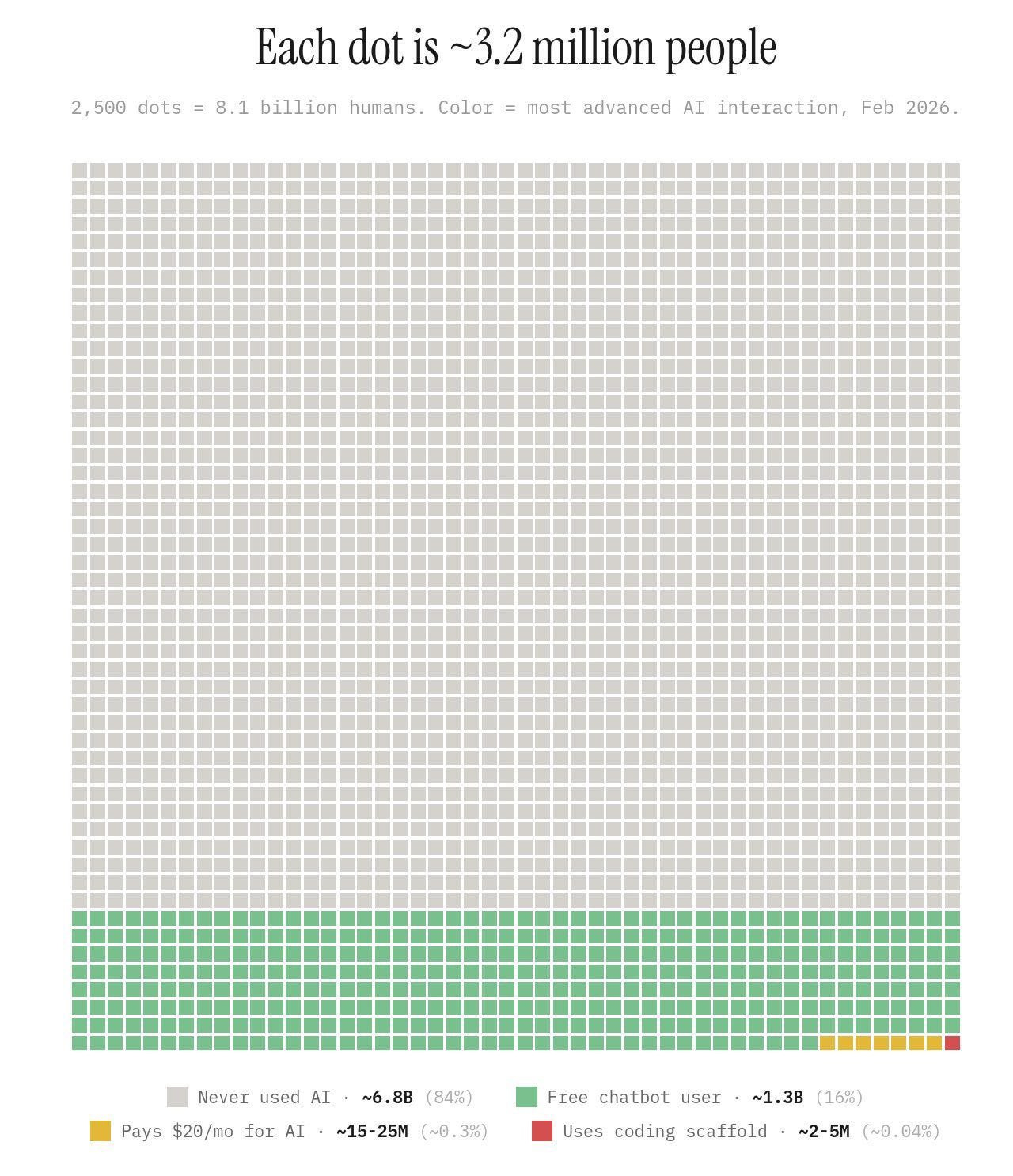
That’s the opportunity.
Instead of building another tool for developers or prompt engineers, build AI products for ordinary people who have real problems and don’t care how the technology works.
Think about use cases like:
Helping parents plan meals and schedules
Assisting students with studying and homework
Guiding seniors through technology and paperwork
Supporting job seekers with resumes and interview prep
Helping small business owners automate repetitive tasks
The best part is that many customers don’t need a standalone app. They need a clear outcome and someone to show them how to use AI to get there.
That opens up two paths:
Build simple consumer apps around specific problems.
Offer workshops, training, or done-for-you services that teach people how to use AI in practical ways.
You could start with in-person sessions for professionals, parents, or small business owners, then turn what works into software, templates, or subscriptions.
The market is massive because most people are still on the sidelines. They know AI matters, but they haven’t yet found products that feel approachable and genuinely useful.
The biggest winners may not be the companies building better models. They may be the ones who make AI feel simple and helpful for everyone else.
🏇 SIDE HUSTLES & PASSIVE INCOME
$1,000/month from five faceless AI music channels
From a Reddit post where someone shared how a small portfolio of AI-generated music channels grew into a consistent income stream.
He runs five separate “artist” channels - two focused on instrumental music, two on nightcore, and one on AI-generated covers. Together, they generate around $195-$200 per channel each month, or roughly $1,000 in monthly income.

The process is surprisingly systematic.
He uses Suno to generate songs, distributes them to Spotify via DistroKid, and creates simple faceless videos with CapCut and Canva.
Each month, he batches the work:
Generates 60-80 tracks over 1-2 days
Edits and prepares videos over the following week
Schedules 3-5 uploads per day across all channels
His total software cost is just $10-15 per month.
Over time, he noticed clear patterns.
AI covers of popular songs generated the most reach
Instrumental tracks produced the best return for the effort required
Nightcore performed well within a dedicated niche audience
The breakthrough didn’t happen immediately. After roughly six months of consistent uploads, one song went viral on TikTok and pulled attention to the rest of his catalog.
What I like about this example is that it treats content like an asset portfolio. Each track may earn only a small amount, but publishing hundreds of them creates a growing library that can continue generating revenue over time.
Earning $5K+ from half a garage (lightweight property-management business).
From a Reddit thread where someone shared one of the simplest passive income ideas I’ve come across.

He had a two-car garage but only used one side. Instead of letting the other half sit empty, he rented it to a sports car owner for $125 per month.
The arrangement turned out to be remarkably low maintenance.
The renter has visited only twice in four years
Monthly income: $125
Total earned so far: $5,000+
What makes this interesting is that there’s steady demand for secure covered storage. Owners of sports cars, classic vehicles, and seasonal cars often need a safe place to keep them for months at a time.
Platforms like Neighbor make this easy by connecting people with unused garages, driveways, and storage space. In many markets, a single garage bay can generate $100-200 per month.
Even if you don’t have your own garage, there may still be an opportunity.
You could help neighbors list their unused garage space, handle the renter relationship, and split the revenue.
10 garages at $150/month each = $1,500/month in total revenue
A 50% management split = $750/month for coordinating the listings
It’s essentially a lightweight property-management business, but focused on garages instead of homes.
$1000 from flipping three iPhones with a custom deal bot
From a Reddit post where a side hustler shared how he built his own listing monitor after getting frustrated with expensive deal-alert bots.

He flips iPhones, AirPods, and other electronics on the side. The biggest challenge wasn’t reselling - it was finding underpriced listings before other buyers.
So he built a simple tool that monitors marketplaces like Facebook Marketplace, Vinted, and Wallapop, applies custom filters, and sends instant alerts when something looks underpriced.
A few weeks ago, the bot surfaced three strong iPhone deals. He bought them, cleaned them up, and resold them for about €690 in profit after fees.
Today, he completes around 4-7 flips per month, generating roughly €600-900 in extra income.
What stood out to me is that the tool isn’t limited to electronics. People in his community are using it to spot deals on:
Pokémon cards
Sneakers and hoodies
Gaming gear
Other collectibles
Instead of charging for the software, he decided to open source it and focus on building a community first.
The broader lesson is that your biggest pain point can often become a product. In this case, a simple tool built to solve one personal frustration turned into both a profitable side hustle and a product with much wider potential.
📬 Venture Radar Premium
Upgrade to Venture Radar Premium to unlock deep dives, playbooks, templates, and our growing business idea database.
🗃️ REAL BUSINESSES
$400K/year from travel guides focused on just one city
Jessica Dante built a highly focused travel business by doing something most creators avoid: covering only one destination. Instead of chasing new countries every month, she went all-in on London.
That decision turned out to be incredibly valuable.
One early YouTube video, “10 important things to know before you visit London,” surpassed 1 million views
Built an audience of 365K YouTube subscribers and an 85K email list
Sold 15,000 digital travel guides since 2023
Guide prices range from $45 to $150
Estimated revenue from guides alone is roughly $400K/year

What makes this model so attractive is that the audience is highly intentional. These are not casual viewers scrolling for entertainment. They are actively planning a trip and looking for trustworthy recommendations.
That means they are much more likely to:
Buy premium travel guides
Click affiliate links for hotels and activities
Engage with sponsor offers
I like this model because the content is evergreen and the market renews itself constantly. Millions of people visit major cities every year, and each new wave of travelers needs the same practical information.
Pick a destination with strong tourism demand, create genuinely helpful videos, and package your expertise into guides people can purchase before they land.
$4.3M/year from a low-tech, AI-proof porta-potty business
Daniel Tom was training to become a PE teacher when he took a part-time job at a portable toilet company. Instead of pursuing teaching, he spent seven years learning the business and eventually launched Bay Area Sanitation in 2023 with one truck and 100 toilets.

Three years later, the company has scaled dramatically.
12 trucks serving the Bay Area
Nearly 2,000 portable toilets on rent
500+ active job sites
$4.3 million in 2025 revenue
Approximately 22% net profit margins
The economics are surprisingly attractive. Most units are rented to construction sites for around $60 per week, and projects often last for months or even years. That creates highly predictable recurring revenue.
Daniel estimates that each additional toilet placed in service adds more than $160 per month in recurring income.
What makes this business especially compelling is its simplicity. There is no cutting-edge technology, no algorithm risk, and no concern about AI replacing the service. Construction sites will always need sanitation.
It is one of those businesses that many people overlook because it lacks glamour, which is precisely why the opportunity remains attractive for operators willing to get their hands dirty.
$35K/month from ATMs managed from his phone
Giani was working as a police officer when he noticed a simple business hiding in plain sight. Customers at his local gas station were constantly using the ATM, and he learned it was owned by “some dude in a pickup truck.”

That was enough to spark a new business.
Today, Giani operates 83 ATMs across multiple states and earns around $35,000 per month in surcharge fees.
Each ATM costs roughly $2,800 to purchase
Internet connectivity runs about $10/month
Inventory is simply cash, which cycles back into your account
Machines can be relocated if a location underperforms
The entire business is monitored remotely from his phone
Some locations generate modest returns, like a barber shop earning around $340/month after expenses. Others are much more lucrative. His best-performing ATM, placed at an ATV rental business, brings in $3,000 to $5,000 per month.
What makes this model appealing is its simplicity. Unlike vending machines, there is no physical inventory to source, no product spoilage, and no health regulations to worry about.
I like businesses like this because they are based on recurring cash flow and straightforward economics. Once you secure a good location, the machine quietly compounds income in the background.
$40K/month from going live on Whatnot three times a week
From a Reddit post where a beauty brand owner shared how live selling became a meaningful new revenue channel.

The company had already been doing around $100K per month through its existing business. Then they started hosting live auctions on Whatnot just three times per week.

The growth happened surprisingly fast.
First show: $1.5K in sales
Month 1: $20K
Month 3: $40K/month from Whatnot alone
What stood out to me is how quickly a new distribution channel can scale when the product and audience are already in place.
The founder believes live commerce in the U.S. is still early. In China, live shopping has become a massive industry, while the market in the United States is still developing. They’re now expanding to TikTok Shop, which recently introduced auction-style features and can push live sellers to the For You feed.
The bigger opportunity may be for people who don’t have products of their own.
Many small e-commerce brands have inventory but lack the time or on-camera skills to host live sales. If you’re comfortable presenting products, you could offer to run their Whatnot or TikTok live sessions and earn a percentage of revenue.
It’s a good reminder that sometimes the business opportunity isn’t creating a new product - it’s becoming the distribution engine for brands that already have one.
$3M/year hauling junk after starting with a $4K pickup truck
Kirk and Jacob McKinney were still in high school when they bought a used pickup truck for $4,000 and started hauling junk after classes. What began as a simple side hustle has grown into Junk Teens, a debt-free business that generated $3 million in 2025.
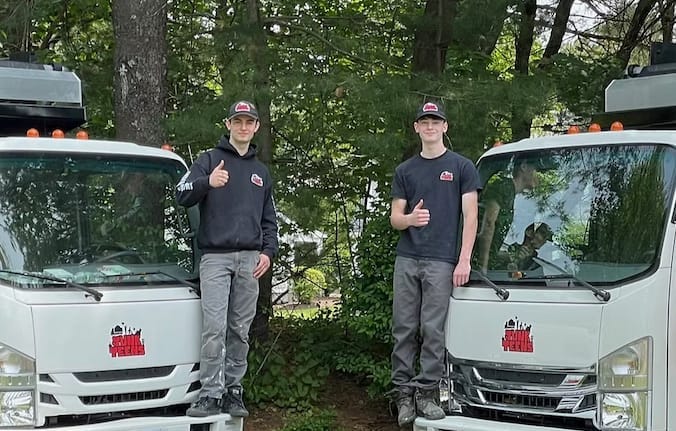
Started in 2021 from their parents’ driveway in Massachusetts
Now operate 5 trucks, employ 25 people, and completed 5,500+ jobs last year
Built the business without taking on debt or financing vehicles
Both founders are now in college while continuing to scale the company
The early days were messy. Kirk says he was late to school so often from dumping loads that he once got detention. But they kept reinvesting profits, added trucks only when they could pay cash, and focused on steady growth.
What I like about this story is how straightforward the model is. Junk removal is not glamorous, but it solves a real problem that homeowners, landlords, and real estate agents deal with every day.
If you have access to a pickup truck and are willing to do physical work, this is one of those businesses you can start small and scale surprisingly far.
Partnership With US
Partner with us : Get your brand in front of 50000+ readers including founders, indie hackers, side hustlers and aspiring founders.
Thanks for reading today’s newsletter. Stay tuned for more!
