


👋 Hi and welcome to today’s edition of Venture Radar - where we uncover real boring businesses making real money, and break down how they do it.
Here’s today at a glance -
Steal this ideas: startups that cut your bills + $1,000s per clinical trial patient
Real businesses: $240K in 10 days, $185K/month rented websites & $108K solo SaaS
Side hustles: $231K credit card consulting, $60K/month garage floors & $8K/weekend coffee cart
Unlock 50+ founder playbooks & templates, a growing database of profitable business ideas and 2-3 premium deep dives every week.
FROM OUR PARTNER - MECO
📪 The best new app for newsletter reading - Meco

Reading newsletters in the inbox is frustrating - it is noisy and easy to lose control of subscriptions.
Now with Meco you can enjoy your newsletters in an app built for reading, while giving your inbox space to breathe.
Meco connects to Gmail & Outlook, allowing you to instantly move your newsletters to the app (and clear your inbox)
Over 30k readers are enjoying their newsletters (and decluttering their inbox) with Meco.
Partnership With US
Partner with us : Get your brand in front of 55,500+ readers including founders, indie hackers, side hustlers and aspiring founders.
🥷 STEAL THIS BUSINESS IDEA
Opportunity: Build startups that make everyday life cheaper.
Andrew Yang thinks one of the next big startup opportunities is surprisingly simple: help people spend less on things they already need.
His point is that as AI changes jobs and puts more pressure on household incomes, consumers will care even more about lowering recurring expenses.
That creates opportunities in categories like housing, food, healthcare, transportation, education, wireless plans, insurance, and energy.
There are already interesting examples. Mark Cuban’s Cost Plus Drugs attacks prescription drug markups, while Yang’s Noble Mobile offers cheaper wireless service and gives customers money back when they use less data.
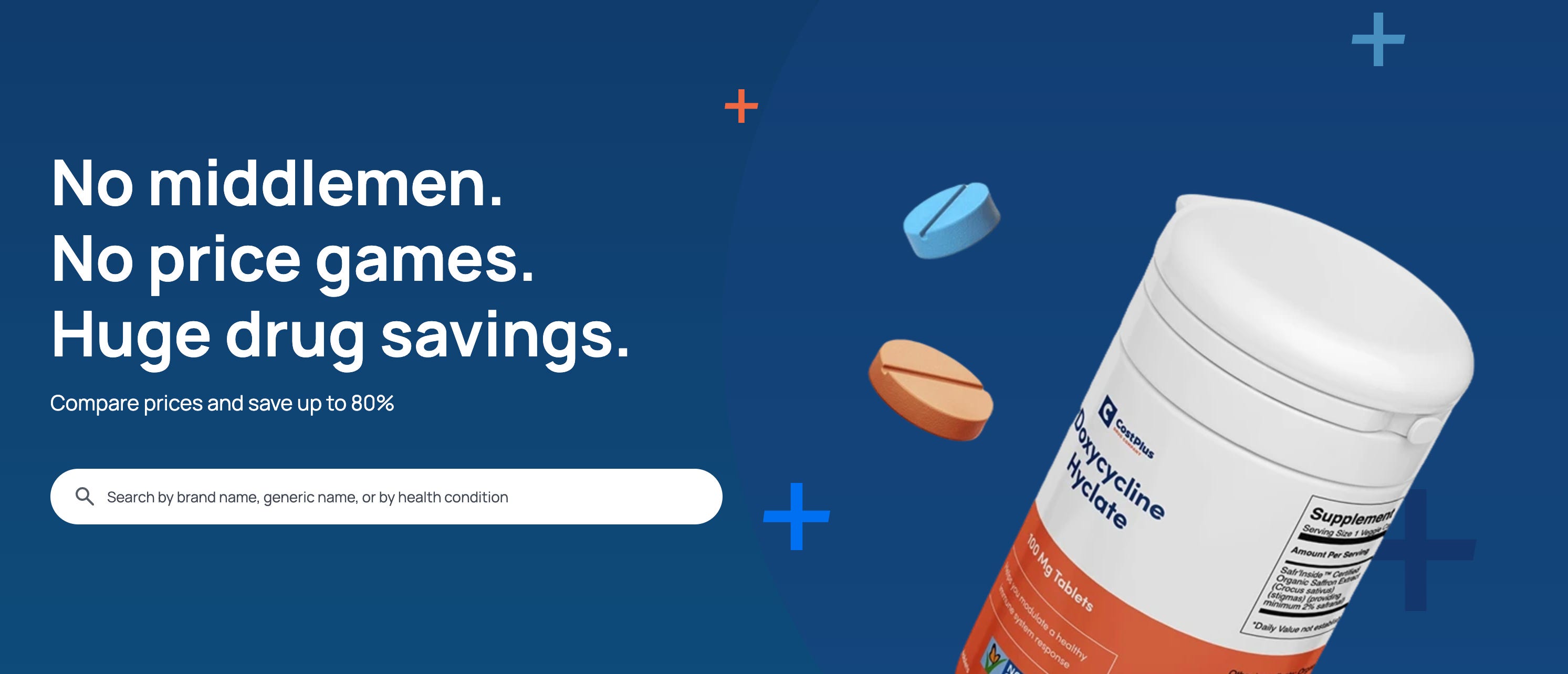
The startup opportunity isn’t necessarily inventing something new. Look at industries where consumers have been paying roughly the same companies for decades and ask: why is this still so expensive?
The playbook could be simple:
Find a large unavoidable household expense,
Identify where unnecessary margin or middlemen sit,
Then rebuild the experience with a lower-cost structure.
Healthcare bills. Car insurance. Internet. Childcare. Utilities. Groceries. Home maintenance. Education.
These aren’t exciting new categories. That’s exactly what makes them interesting.
If you can consistently save a household $50-$200 every month, you don’t need to convince people they have a problem. They already see it every time the bill arrives.
The next great consumer startup might not help people spend more. It might help them keep more of what they already earn.
Steal this business idea: Patient recruitment agency for clinical trials.
This is one of those businesses that sounds complicated until you look at what the customer is actually paying for.
Clinical trials constantly struggle to find enough eligible patients. Pharma companies and research sites can spend thousands to recruit a single participant, and many trials still miss enrollment targets.
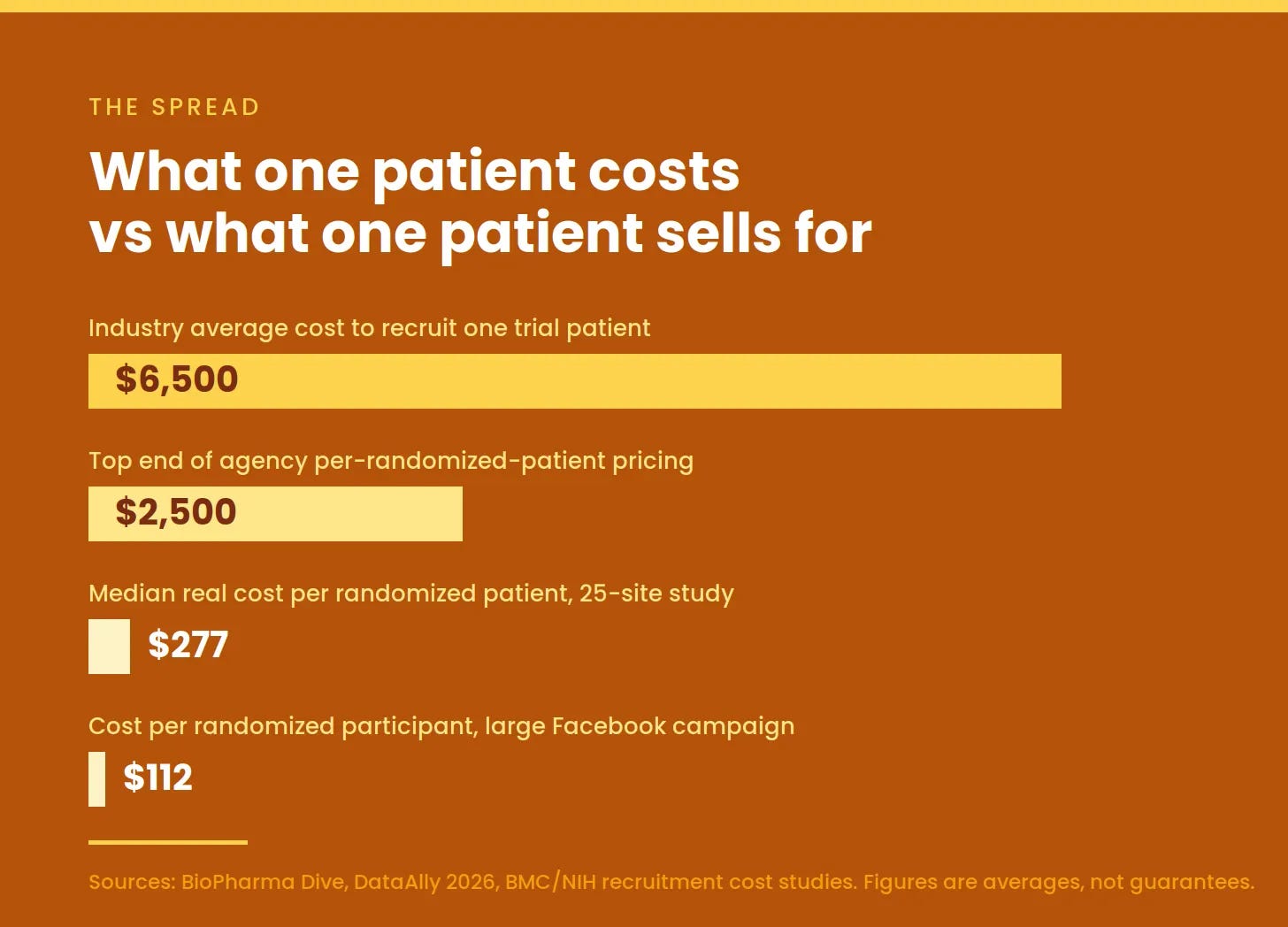
The opportunity is to become the specialist who helps them find those patients.
A research site might need 200 people with a specific condition, age range, medication history, and location. Your job is to build compliant ad campaigns, run them on channels like Facebook and Google, pre-screen interested people, and send qualified candidates to the site.
At its core, it is a very specialized performance marketing agency.
The difference is the economics.
A normal client might complain about paying $100 for a lead. A clinical research site can justify spending far more because one successfully enrolled patient may be worth thousands of dollars, while delayed enrollment can cost the sponsor much more.
The simplest way to start is with individual research sites rather than giant pharma companies.
Pick one area such as dermatology, diabetes, or women’s health,
Learn the advertising and IRB rules properly, and
Become known for recruiting patients in that niche.
You could charge a monthly management fee plus ad spend at first. Once you have your own data on what it costs to recruit patients for specific conditions, you can move toward performance-based pricing.
Finding prospects is surprisingly straightforward too. Recruiting studies are publicly listed on ClinicalTrials.gov with conditions, locations, enrollment goals, and contact information. Older studies that are still recruiting are an obvious place to start.
The moat isn’t some complicated technology.
It’s knowing how to run paid acquisition in a market where compliance scares most marketers away.
If you can learn the rules, consistently deliver qualified patients, and prove that you help sites fill trials faster, this can become a very profitable niche agency.
FROM OUR PARTNER - KRISP
🤝 Your 45-minute meeting shouldn’t create another 30 minutes of work
Client calls are already part of running a business. Writing notes, pulling out action items, and figuring out what needs to happen next shouldn’t be.
Krisp handles that work for you.

It removes background noise and echo during the call, then automatically captures the conversation, creates notes and summaries, and pulls out the next steps afterward.
So you can actually focus on the person you’re talking to instead of taking notes and finish the meeting without creating another task for yourself.
And if you’re a founder managing client calls across a small team, the time saved across everyone’s meetings adds up fast.