


👋 Hi and welcome to today’s edition of Venture Radar — where we uncover real internet businesses making real money, and break down how they do it.
In today’s write-up, we’re sharing curated articles, posts, videos and business we found interesting on building boring and underrated businesses. Let’s deep dive into it.
MUST RECOMMEND FOR FOUNDERS
🔖 All-In-One Marketing Guide For Founders
Built something cool but no users? You’re not alone. This Marketing Guide for Founders is made for solo builders, indie hackers & early-stage teams.

What’s inside:
Where to post for traction
Cold DM + email templates that actually work
SEO, landing pages & content tactics that convert
How to test demand before building
Just battle-tested strategies you can copy today.
Partner with us..
Get your brand in front of 25000+ readers including founders, indie hackers, side hustlers and aspiring founders. Partner with us →
🥷 STEAL THIS BUSINESS IDEA
Steal this business idea: AI revenue recovery for service businesses
Most local businesses obsess over getting new customers — but quietly lose thousands from not rebooking the ones they already served. Salons, lawn care crews, dental clinics, massage therapists — all suffer from the same silent leak: no follow-up.
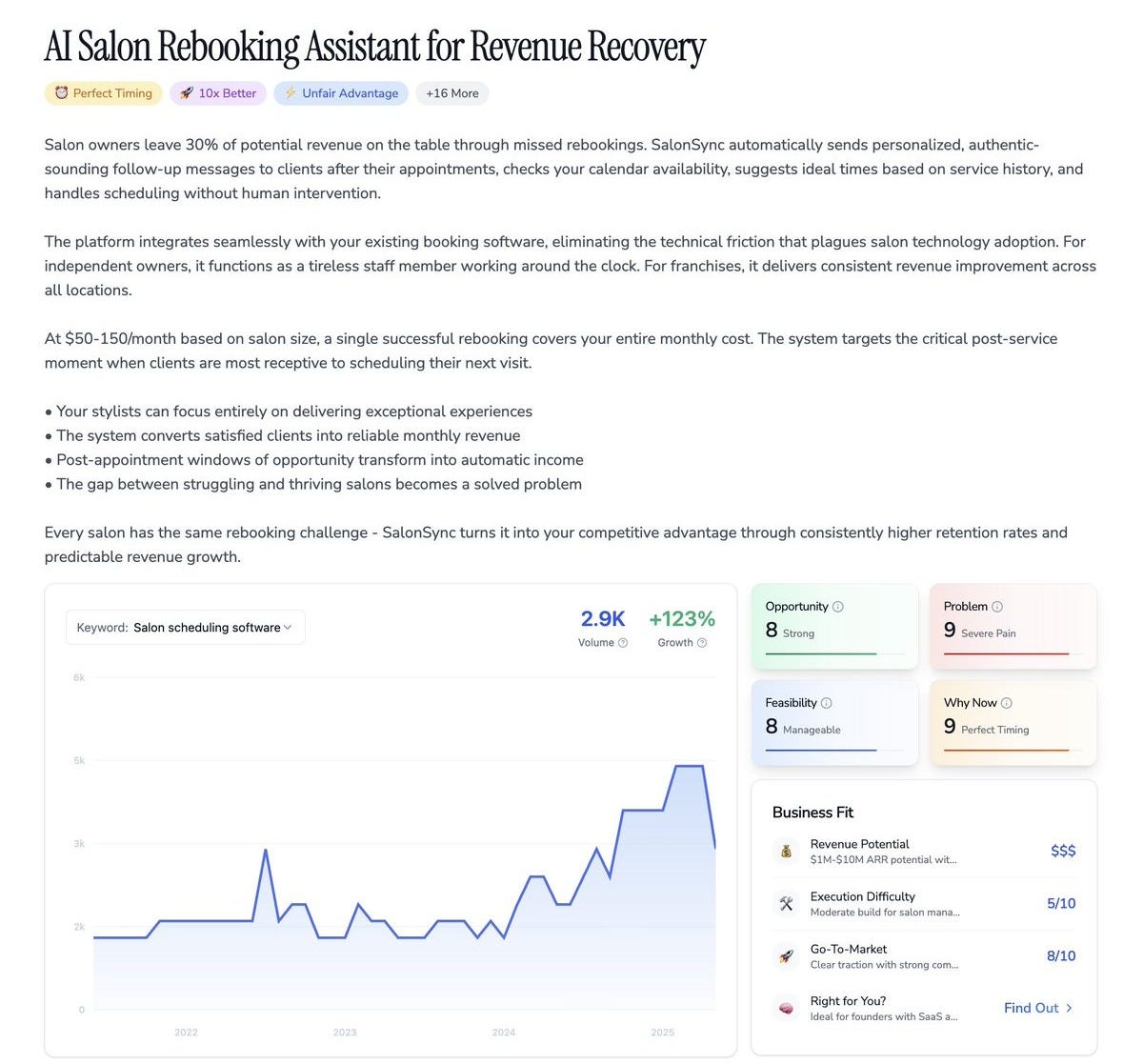
The opportunity? Build an AI agent that automatically sends rebooking nudges, personalized offers, and timely check-ins. Not marketing spam — real, helpful prompts that turn one-time buyers into repeat customers.
Start with salons. They lose up to 30% of potential revenue from missed rebookings. Your tool integrates with their scheduling software, tracks appointment history, and auto-sends the perfect follow-up text or email when clients are most likely to say yes.
Expand to:
Lawn care (automated “It’s time for your next mow” texts)
Nail studios (send ideal rebooking slots post-visit)
Dental clinics (gentle check-ins + insurance reminders)
Car detailing (monthly maintenance nudges)
Charge $50–$150/month depending on business size. One extra booking usually covers the cost.
You’re not selling “growth.” You’re fixing retention — the core leak in their revenue bucket.
Every service business already has a customer base. Your AI makes sure they don’t waste it.
Steal this business idea: a smarter form builder for small businesses
AI-generated spam and bot junk are quietly wrecking lead quality for local businesses. Fake emails, burner numbers, and bad form entries pile up in CRMs—hurting follow-ups and even email deliverability.
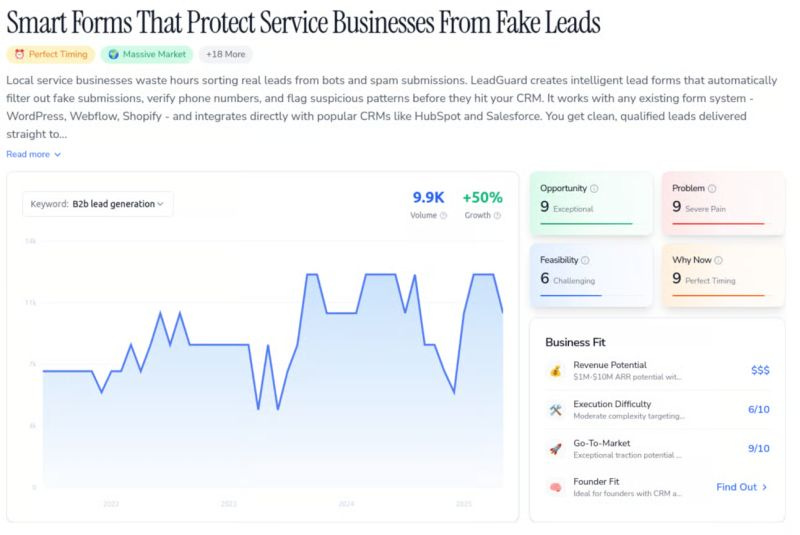
Here’s the gap: most small businesses still use basic tools like Google Forms or janky WordPress plugins. But they need better lead filters, not more data.
What to build:
A form builder with real-time spam + bot detection
Validates emails, phone numbers, and patterns instantly
Auto-formats and cleans input before pushing to CRM
Works out-of-the-box with Zapier, Notion, HubSpot, etc.
This isn't a sexy AI moonshot. But with 35M+ small businesses in the U.S., it's a painkiller product—quietly useful, sticky, and highly monetizable with simple SaaS pricing. (More Here)
Steal this business idea: a security agent for AI-coded software.
As no-code and AI coding tools like Cursor explode in popularity, non-technical founders are building real products fast. But there's a blind spot: security.
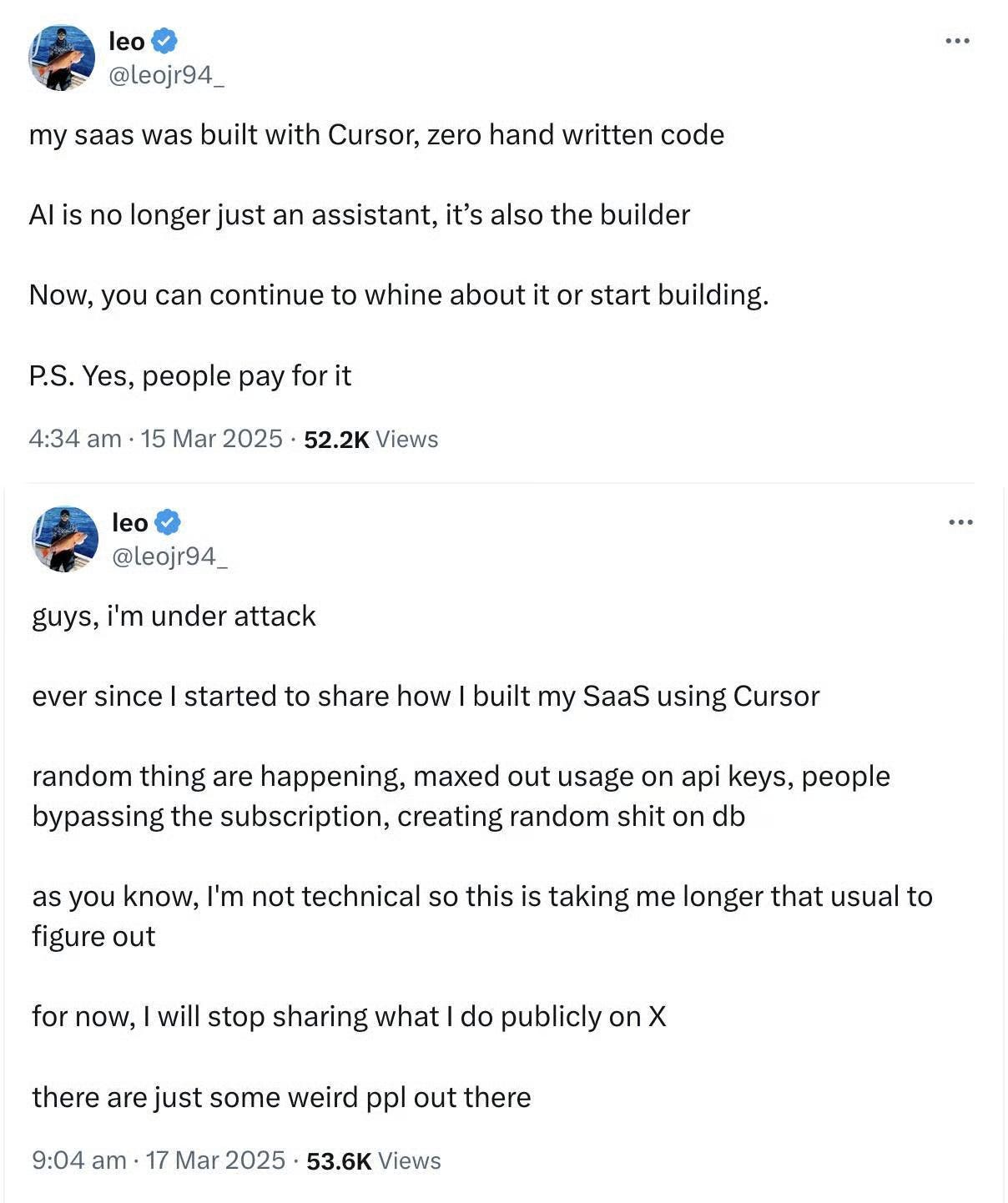
Too many of these AI-built tools have gaping security holes. Even technical devs are overlooking vulnerabilities because they're overly reliant on AI pair programming.
The gap:
Traditional security tools weren’t designed for this new AI-first workflow.
What to build:
A Vibecoding Security Agent—an AI-native tool that scans AI-coded project
Identifies common security gaps left by copilots like GPT, Cursor, etc.
Offers real-time suggestions and fixes, like an AI security reviewer
Designed for solo devs, indie hackers, and small teams using AI to ship products fast
If you’re a strong security engineer, this is your window to build the AI-native security layer that current tools can’t offer. VCs would likely back it.
TOOL FOR FOUNDERS
🚀 Grow your startup without spending a cent on ads.
Thousands of founders are using building in public as their main growth engine and you can too. The Build in Public Starter Pack gives you the exact roadmap.

Inside, you’ll get:
What to share (and what to avoid) to attract trust & early customers
The best platforms for your updates (Twitter/X, LinkedIn, TikTok, etc.)
A weekly posting rhythm you can actually stick to
20+ real founder examples and why their posts work
Templates to write your first 10 public updates
You don’t need a big audience, just the right approach.
He made his first $1,370 from a desktop AI tool, after fixing one simple trust issue
A Turkish indie dev launched AI Renamer, a desktop app that renames files based on their content using AI. His first Reddit post went semi-viral (180K+ views, 700+ upvotes), but got just one sale. Why? People didn’t trust the cloud.
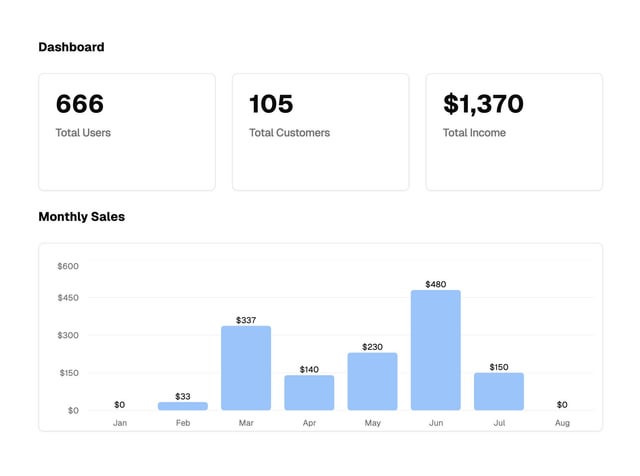
He listened: added support for local models in March.
Relaunched on Product Hunt and finally started making sales.
In 5 months, he made $1,370 from the app, his first paid product ever.
He used Polar for payments (since Stripe isn’t available in Turkey) and learned that monetizing didn’t require a company or a complex setup. That first $1 erased years of hesitation.
People don’t just pay for tools, they pay for trust. Solve the fear, and revenue can follow. (More Here)
This indie founder’s ASO tool just hit $850/month by balancing build & marketing right
From a Reddit conversation where someone shared how they grew their SaaS, GrowASO, a platform for mobile app store optimization to $850 in the last 30 days.
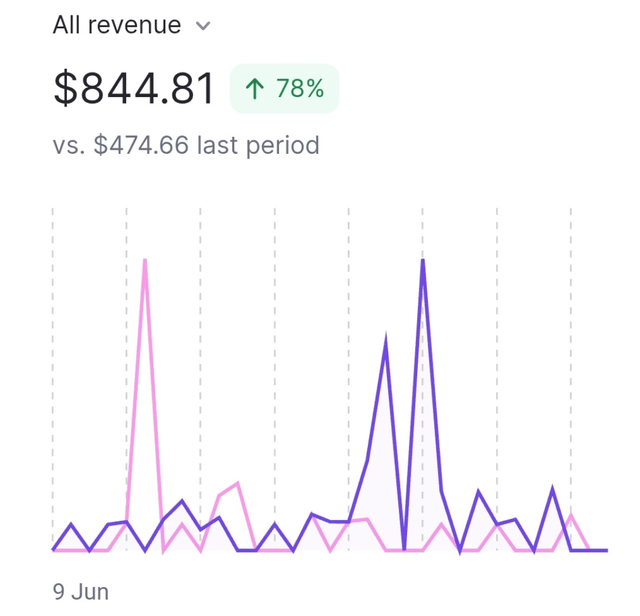
For 12+ months, progress was slow, but consistent effort paid off
He found the right audience (indie app developers) and showed up where they hang out: Reddit, X, YouTube
Did free app audits, shared content, and offered free tools to build trust and traffic
Switched from only yearly plans to monthly plans—this alone boosted conversions
Biggest takeaway: don’t over-optimize on just dev or just marketing. You need both. (More Here)
17-year-old solo founder makes $307 in 2 weeks from AI journaling tool.
From a Reddit conversation where 17-year-old Yasin Ahmed shared his indie hacker journey after launching Alpha Journal, an AI-powered journaling tool for crypto/forex traders.
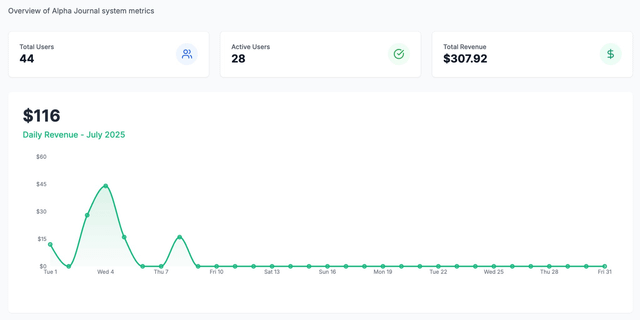
Built the entire product solo: frontend, backend, UX no funding or team
Launched just 2 weeks ago, already has 44 users (28 active), and $307+ in revenue
Started coding at 14, dropped out of school at 15 this is his first real product out in the world
His advice: it’s not perfect, but it’s real, and it’s growing. Just start. (More Here)
Trying this entrepreneur thing. It’s hard.
From a Reddit post where a solo founder shares what it really feels like to start something alone - no team, no funding, just pure hustle.

Some days bring sales and validation. Other days are just... silence.
They don't want a regular job. They enjoy working for themselves but the emotional ups and downs are brutal.
No one tells you what to do. You have to self-motivate, even on days you feel lost or tired.
The top comment nails it:
"Solo entrepreneurship is basically choosing emotional whiplash as a career."
Still, they keep going. Because somewhere deep down, they believe it's worth it. (More Here)
Boring businesses, big profits: What Redditors shared
From windshield repair to porta-potties, Reddit users shared real-life boring business ideas that quietly rake in money. Here's a breakdown of some of the most insightful responses from the thread:
Windshield repair
$300 startup tools, $75–150 per repair
Mobile service + lifetime warranty = premium clients
Services luxury cars like McLaren, Bentley, BMWs
Porta-potty rentals
Simple, unglamorous, but recurring and high-margin
Common for construction sites and events
“If you doo-doo it right,” profits can be solid
Car detailing
Teen charges $250/detail, 3/day = $20K+/mo
Deep cleans, wax, clay bar—targets premium customers
Very low barrier to entry, high-value output
Mobile tech setup / smart home help
$100/hr offers to help families set up devices
Many see it as a valuable, in-demand but underdeveloped service
Challenges: takes longer than expected, support issues
Data cleanup services
Fixing messy customer databases = high ROI for businesses
Not glamorous, but companies pay well for clean data
One Redditor said it saved a client “hours every week”
Insurance sales
Soul-sucking? Maybe. Profitable? Absolutely.
Agents in SaaS finance reported seeing $300K+/yr
High commissions and recurring clients
Concrete & driveway business
One job: $30K for 2 days of work
Requires labor and equipment, but lucrative in the right markets
High-ticket, fast-execution projects
Dog pickup and drop daycare
Owner picks up 15–25 dogs, lets them play, drops them home
Scaled into a van + house purchase
Great for dog-friendly urban areas
Pay-per-call lead generation
Not much detail in the thread, but mentioned as high-earning
Basically: generate inbound leads for businesses via phone and get paid per call
Vending machines & parking lot
Once set up, they quietly generate passive income
Not sexy, but surprisingly dependable
Especially profitable in high-traffic or urban areas
🗃️ SIDE HUSTLES & BUSINESSES
What kind of side projects people are working right now?
A Reddit user asked what side projects people are working on and hundreds responded with fascinating (and often useful) tools in progress. Here's a snapshot of the most interesting ones and some insights if you are building:

AI + Productivity
Tons of projects use AI to automate boring tasks:
Subtitling videos (Subtitleme.io)
Writing resumes (Resumelo.me)
Scheduling social/blog content (Stryng.io)
Creating realistic ads (Superads.space)
Fake ChatGPT tools and memory condensing (FakeChatGPT, Threadlink)
Indie hackers are rushing to build AI wrappers around everyday workflows. Simple UIs + GPT = fast launch, fast utility. The tools aren’t revolutionary, but the distribution angle is the differentiator.
Health & Wellness
Many are building in personal health, especially non-clinical tools:
SmartFitAI (smart nutritionist app)
FaceDCode (scan your face for vitals)
Lominic (analyzing fitness data from Strava/Garmin)
Health is moving personal and passive. Creators are exploring low-friction wellness tech—no wearables, just software on top of existing platforms or sensors.
Developer Tools / Infrastructure
Projects that scratch a dev itch:
Tab managers, clipboard sync (Tab9, CLIPP)
Dev environment backup (Barrel)
CI/CD monitoring (BuildBeacon.io)
API documentation via natural language
Dev tools remain a staple. But unlike big VC-backed infra, these tools are hyper-specific and opinionated—built by devs for themselves.
Local Services / Legal / Real-world Utility
Legal Q&A for Arabic speakers (LegalMind Lite)
Baby-friendly restaurant map (Nursey)
Tech setup help, dog daycare, smart home config ideas from earlier threads
"Unsexy problems" are gaining steam. Builders are solving language barriers, parenting logistics, or niche location issues—underserved by Silicon Valley.
Content Tools + Community
Crowdsource tools (Eyezu, SteamShark)
AI content planners (Stryng, CurioMate)
Focus timers with community streaks
Side-project launch platforms (Openhunts, Greatlist)
The content-tool economy is alive. But there's a pivot from solo creators to tools that support creators as communities, helping them stay consistent, collaborate, or compete.
2025 indie builders aren’t chasing billion-dollar markets. They’re solving micro-annoyances using AI, automation, or interface polish—across health, productivity, legal, and creator tooling.
If you’re deciding what to build: Look for low-friction pains in daily life. Especially the ones people mention but no big company bothers to fix. (More Here)
This $650K/year golf business should be everywhere (but it’s not)
Look at this google map location

A genius little tourist trap in New Zealand called the Lake Taupo Hole in One Challenge.
It’s a floating golf target in the middle of the lake, pay ~$20 for 20 balls and try to win $10,000 if you hit a hole-in-one.
They average 26 winners a year, which aligns with 1-in-20,000 odds for casual players. But the average player isn’t even that good, meaning odds are stacked in favor of the business.
Estimated $650K in annual revenue, $200K–$300K in profit. All from a wooden shack, golf balls, and a floating green.
This is one of those rare businesses where probability becomes your moat. Most customers leave without winning, but they still had fun. The math makes it work.
You could replicate this with any sport, in any touristy area, with a well-priced "shot at glory." (More Here)
From productized service to $1M/year SaaS
Craig Hewitt started with a podcast editing and production service. One day, a client mentioned a WordPress plugin in the podcasting space that was up for sale. Craig bought it, revamped it, and integrated it into his service workflow.
That was the birth of Castos, a podcast hosting platform. The SaaS product steadily took off, today, it brings in 80% of his 7-figure revenue.
He didn’t invent a new category
He improved an existing product
He started with a hands-on service to understand the pain points first
The big idea? Start by doing the manual work. Understand what breaks. Then build (or buy) a tool to fix it better than others. You don’t always need a new idea just a better execution in an overlooked niche. (More Here)
This local side hustle could earn you $300/hour
A Redditor shared a lightbulb moment after hiring someone to fix a dryer belt.
The job took 13 minutes and cost $100 in labor
The part was cheap and the fix was easy learnable via a 5-minute YouTube video
The repair guy was booked out and even had an assistant to help with demand
All you really need to start: a bulk pack of belts, a screwdriver, and the willingness to drive. Do just 3 calls a day and you’re clearing $300+ for an hour’s work (plus travel).
Opportunities are everywhere, especially the boring, hyper-local ones that no one talks about. If it’s repeatable, in-demand, and high-margin, you don’t need to be a genius. You just need to start. (More Here)
Charging $1,000s per month per client for this AI service
A recent video by Authority Hacker breaks down a high-demand AI-powered service: B2B cold email outreach for client acquisition.
Some agencies are charging $2,000 to $7,200/month per client
The secret? Using AI to deeply personalize each email so it feels truly 1-on-1
Personalized cold outreach stands out from templated spam and boosts conversion rates
This isn’t a new ideabut AI makes it scalable and more effective. With the right system, you can run multiple campaigns, land clients, and stack recurring revenue fast.
Cold email isn't dead—bad cold email is. AI just made personalization your new superpower. (More Here)
Father & son earning $50K/month within a year doing this
2-year-old Madden Forrest and his dad Steven started a Pokémon and football card "breaking" side hustle buying sealed packs, livestreaming the openings on TikTok, and selling the revealed cards to viewers.
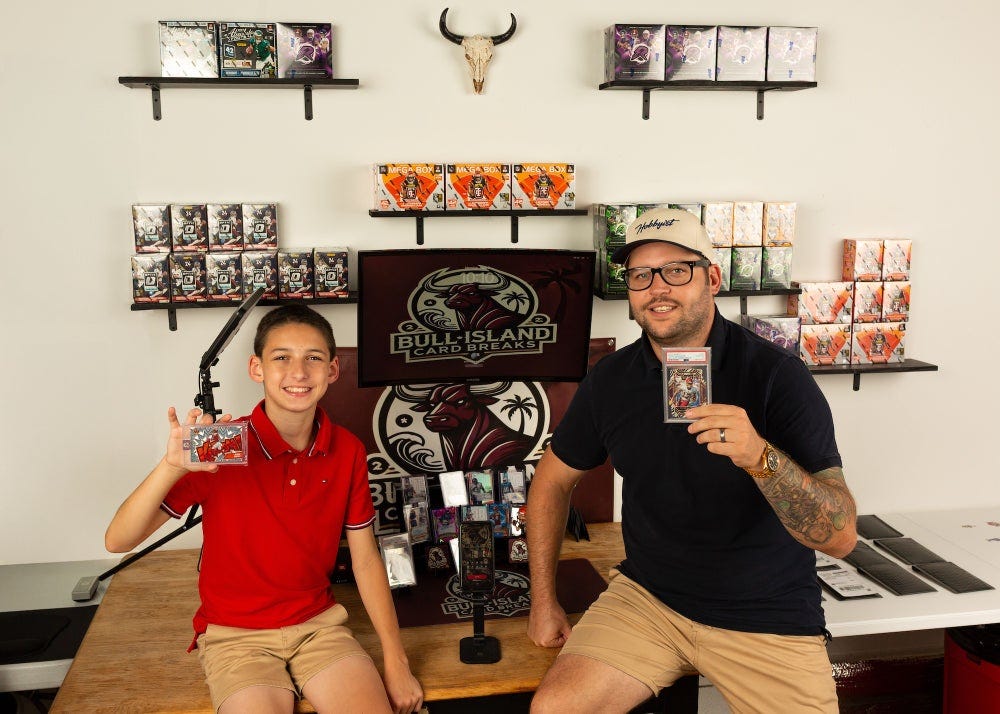
Started in October 2024 as a fun project
Now generating ~$49K/month in revenue with ~39% profit
Their TikTok has only 7.5K followers, proving you don’t need millions to earn big
They didn’t invent the model. They just watched what was working, added their own energy, and went for it. Sometimes, copying well is all it takes to win. (More Here)
💭 YOUR THOUGHTS
🤝 Partnership With US
Partner with us : Get your brand in front of 25000+ readers including founders, indie hackers, side hustlers and aspiring founders.
Thanks for reading today’s newsletter. Stay tuned for more!
Tons of folks build cool stuff but get stuck because no one sees it or trusts it yet. You could try Mails ai to run simple cold outreach and follow-ups to warm up early users without being spammy. It helps you get real replies so you can iterate faster and turn interest into first dollars.