


👋 Hi and welcome to today’s edition of Venture Radar — where we uncover real internet businesses making real money, and break down how they do it.
In today’s write-up, we’re sharing curated articles, posts, videos and business we found interesting on building boring and underrated businesses. Let’s deep dive into it.
TOOL FOR FOUNDERS
🚀 Grow your startup without spending a cent on ads - Building in Public guide.
Thousands of founders are using building in public as their main growth engine and you can too. The Build in Public Starter Pack gives you the exact roadmap.

Inside, you’ll get:
What to share (and what to avoid) to attract trust & early customers
The best platforms for your updates (Twitter/X, LinkedIn, TikTok, etc.)
A weekly posting rhythm you can actually stick to
20+ real founder examples and why their posts work
Templates to write your first 10 public updates
You don’t need a big audience, just the right approach.
Partner with us..
Get your brand in front of 25000+ readers including founders, indie hackers, side hustlers and aspiring founders. Partner with us →
🗃️ SIDE HUSTLES & BUSINESSES
This paid community earns at least $1.75M/year from marketplace founders.
Everything Marketplaces is a private community for marketplace builders — and it brings in at least $1.75M annually. Launched by Mike Williams in 2020 (after scaling two marketplaces to acquisition), the group now has over 2,500 paying members.
Membership: $99/month or $699/year
Estimated revenue: $1.75M+ annually
Focused on founders, operators, and leaders in the marketplace space
Likely run on platforms like Skool, Circle, or Nas.io
Smaller examples are popping up too, like Geekout PRO, a paid WhatsApp group for social media managers with 522 members paying $6/month = $3.1K/month.
The playbook:
Pick a niche where pros need peers
Offer curated conversations, resources, and expert access
Monetize via recurring subs
If you have domain expertise or know someone who does, this is a scalable and profitable model you can build with minimal tech and a lot of trust.
$1M/year from virtual body doubling — and room for niche spinoffs
Focusmate is a virtual coworking platform built around the idea of body doubling — pairing up with another person online to stay accountable during focused work sessions (25/50/75 minutes). It started with just $84K revenue in 2020 and has now grown to an estimated $1M/year, using a simple freemium model ($7/month for unlimited sessions).
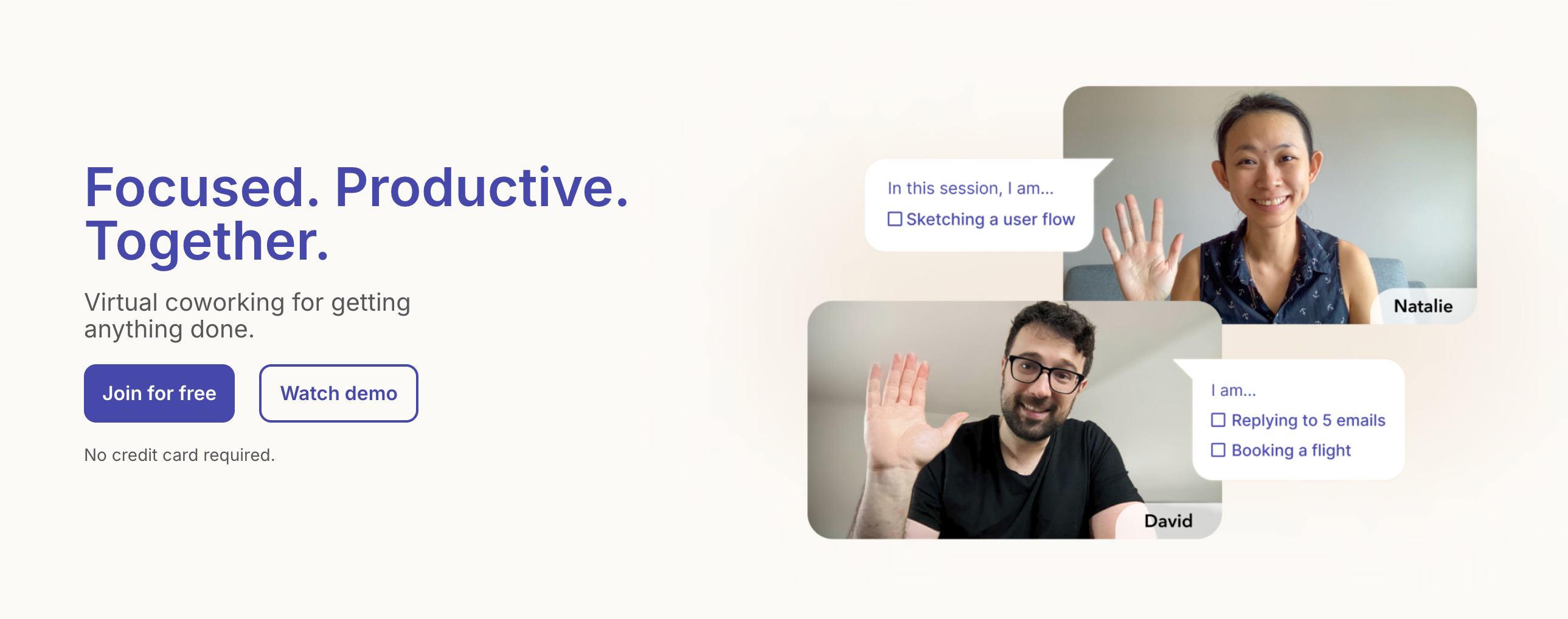
Helps users beat procrastination through live accountability
Matches strangers for real-time co-working via video
Gained popularity among ADHD and neurodivergent communities
Now has thousands of loyal, paying users worldwide
And the best part? The model is highly replicable.
Niche versions could work for:
Writers: focused writing sprints with other authors
Students: exam prep, study blocks, accountability groups
Solopreneurs: hustle sessions with other founders
Non-English speakers: local-language Focusmate alternatives
Neurodivergent users: built-in accommodations, peer groups, quieter interfaces
There’s also proof: Maddie Wang launched a version for founders and grew it to $4K/month. This is a lean, low-tech model with strong community retention — a perfect low-risk idea to test.
Charge $1K per employee to train teams on AI tools
AI-native dev tools like Cursor and Windsurf are powerful — but underused. Safwaan suggests a simple idea: run a weekend, cohort-based course teaching engineers how to get 2x productivity from these tools. Price? $1,000 per employee.
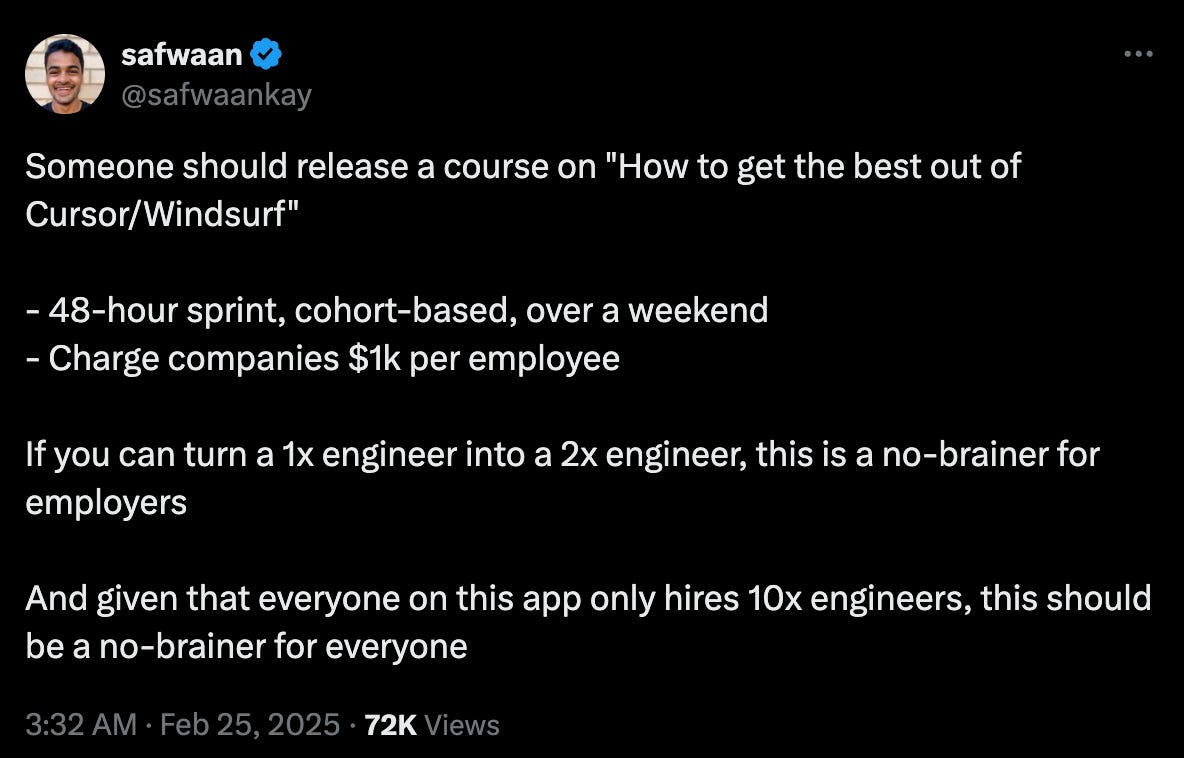
Format: 48-hour weekend sprint or short async cohort
Target: companies willing to upskill devs for efficiency gains
Position: turn junior/mid-level devs into AI-augmented performers
Pricing: $1K/employee is a no-brainer if output improves even slightly
It’s a repeatable playbook:
Pick a popular AI tool (notion, ChatGPT, Claude, Gamma, Perplexity)
Tailor training to a niche (developers, salespeople, teachers, etc.)
Offer both individual and B2B packages
People pay to learn what saves time. Companies pay more if it boosts productivity.
$30K/month from a mobile doggy daycare adventure van
Happy Tails, a NYC-based dog adventure service, turned a $6,000 used van into a booming $30,000/month mobile pet business. Started during the pandemic, the founders wanted to help dogs get outside, socialize, and explore nature — all while their owners stayed in the city.
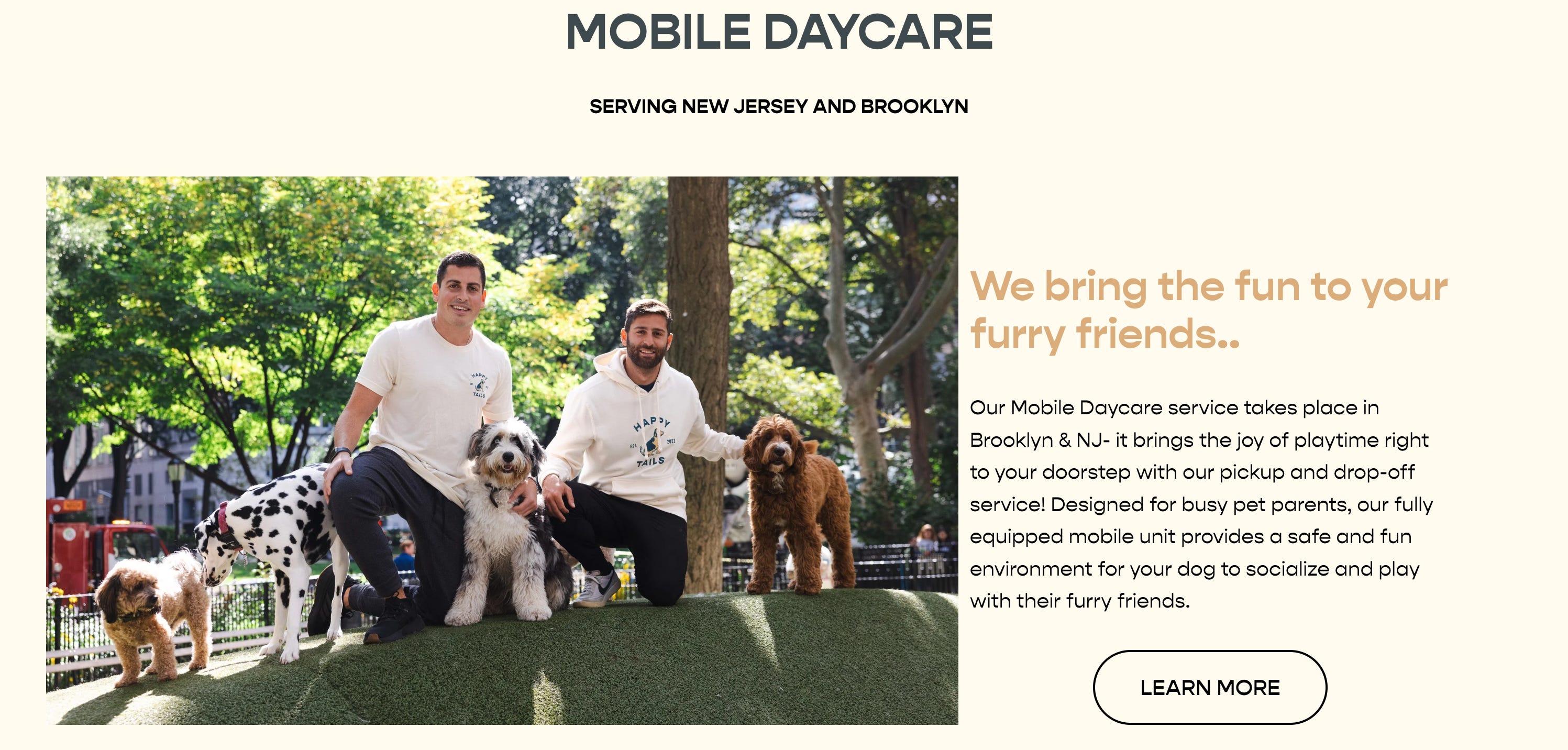
Bought a 1994 Dodge Caravan and retrofitted it to transport dogs
Offered door-to-door pickup and took pups on hiking adventures
Each van made ~$10,000/month with basic expenses (gas, tolls, staff)
Used Instagram to showcase adventures and build demand
Quickly scaled to multiple vans as word spread
It’s another example of turning a traditional service (dog daycare) into a mobile experience — just like mobile flower trucks or food carts. High-trust, hyper-local, and made for social media. There's room to replicate this in almost any metro area.
This daily design challenge earns $20K/month from 450K+ subscribers
Derek Kolstad built Daily UI, a challenge-based newsletter that helps designers improve their skills and build portfolios — and now it earns $20,000/month through sponsorships. The format is simple: one design prompt a day, sent via email, for 100 days.

450,000+ total subscribers and growing by 10K/month
Monetized entirely through newsletter sponsorships
Tagline: Become a Better Designer in 100 Days
Community-powered — subscribers share their work publicly, boosting reach
This is a blueprint worth stealing. Think:
Become a Better Writer in 100 Days
Become More Flexible in 100 Days
Overcome Social Anxiety in 100 Days
Get Stronger at Home in 100 Days
If you can structure a daily challenge around a personal transformation, and pair it with smart sponsorships or upsells — you’ve got a scalable, email-first business.
From broke to $7K/month in 6 months as a remote freelancer
Amber Daughn went from zero to $7,000/month within 6 months by starting out as a virtual assistant — all kicked off with a free 5-Day VA Challenge. With no prior remote work background, she began by pitching her personal network and landed a client right away.
First client had two businesses, doubling her opportunity from day one
Hit $4K/month within 3 months, matching her pre-remote income
Crossed $7K/month in 6 months by adding more clients
Now earns $3K–$17K/month while working ~20 hours a week
Built a travel-friendly, flexible career with stops in Chile, Australia, Hawaii, and more
Her story is a great reminder:
Start lean, tap your network, and raise your rates as you gain trust. There’s still massive demand for smart, reliable generalists who can help founders move faster.
One partnership turned a failing tool into $10K MRR and a six-figure exit
Alexander Belogubov was stuck at $300/month with his solo SaaS, ReplyGuy — a social media auto-reply tool. Burned out and ready to quit, he listed the business for $20K. But instead of selling, a potential buyer proposed a partnership.

That one decision changed everything:
Month 1: MRR jumped from $300 → $2,000
Month 6: MRR hit $10,000
Final outcome: Six-figure acquisition 💰
The difference?
Alexander handled engineering and product
His new partner focused on growth and marketing
This experience inspired IndieMerger, a platform that connects solo founders with complementary partners. If you’re a builder stuck in the same spot, the solution might not be more hustle — it might be the right partner.
$8K/month from a piggyback analytics app for RevenueCat
Dylan built RCKit, a third-party tool that improves how developers track RevenueCat reports — and now earns $8,000/month from it. He originally created it while working on another app, spotted gaps in RevenueCat’s reporting, and built a solution for thousands of developers facing the same issue.
Took 4 years to reach $8K MRR, steadily compounding over time
Solves a narrow but painful gap in a popular platform used by 38,000+ apps
Classic “piggyback” play: build on top of a growing ecosystem
Likely low churn + high retention from serious indie devs and SaaS teams
This strategy still works:
Find a popular tool (Notion, Stripe, Webflow, Linear, Superhuman, etc.)
→ Identify what's missing
→ Build a focused, high-ROI product around it
Piggyback products thrive when platforms grow — and devs are always looking for power-user features.
RESOURCE FOR FOUNDERS
🔖 All-In-One Marketing Guide For Founders
Built something cool but no users? You’re not alone. This Marketing Guide for Founders is made for solo builders, indie hackers & early-stage teams.

What’s inside:
Where to post for traction
Cold DM + email templates that actually work
SEO, landing pages & content tactics that convert
How to test demand before building
Just battle-tested strategies you can copy today.
🥷 STEAL THIS BUSINESS IDEA
Steal this business idea: AI-powered product intelligence reports
Product cloning is easy. Defending your edge is hard. Most teams don’t realize a competitor is creeping in until it's too late. That’s the gap — and the opportunity.
Build an AI tool that tracks competitors' product moves and delivers weekly intelligence reports.
Each report includes:
FTUX walkthroughs of updated products
Feature launches and UI changes
Landing page shifts, messaging tests, pricing updates
Benchmarks vs. your product’s speed, performance, or positioning
Notable customer feedback scraped from public forums
It’s Tegus for product teams. Competitor research done for you, like a secret weapon in your inbox.
Startups and Series A+ companies will happily pay $10K–$50K/year to monitor their top 3–5 competitors without burning internal hours.
Automate most of it using AI:
Use visual diff tools to track landing pages
Use headless browsers to test product UX
Scrape changelogs, newsletters, and press releases
Add GPT-generated commentary to summarize shifts
Monetize as an annual SaaS plan with custom feeds by market or company. Upsell founders, PMs, and VCs with one-click briefings.
The more noisy the market gets, the more this kind of structured signal becomes indispensable.
Steal this business idea: LLM-as-a-Judge API for comparisons
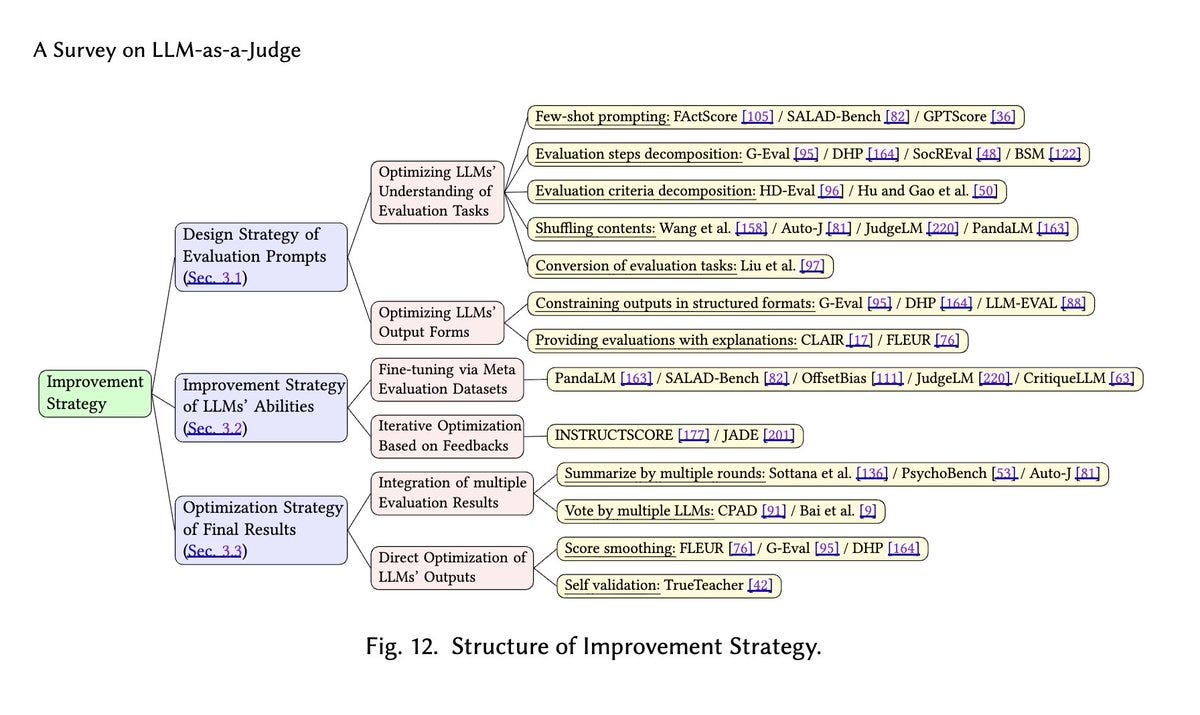
Comparing two outputs with an LLM sounds simple — but doing it well is incredibly hard. Position bias, prompt sensitivity, inconsistent reasoning, lack of structured rubrics... it's easy to get wrong and hard to debug.
The opportunity? Build an API service that offers LLM-as-a-Judge-as-a-Service — a plug-and-play evaluation layer that handles best practices under the hood.
Built-in features:
Ensembling across multiple models
Prompt variation to reduce bias
Chain-of-thought and rubric-based scoring
Self-consistency checks and score smoothing
Optional “explanation included” for transparency
It becomes the go-to evaluation API for:
Comparing model outputs (chatbots, summaries, code)
Ranking product features or user feedback
A/B testing headlines, UI copy, or UX variants
Academic or research evaluation at scale
Auto-benchmarking internal LLMs before deployment
Monetize via usage-based pricing. Offer SDKs and OpenRouter plugins. Add UI wrappers for non-dev teams (e.g., "Which landing page copy wins?").
Research is moving fast (see: G-Eval, FActScore, JudgeLM, Auto-J, TrueTeacher). Most builders don’t have time to keep up — you bake all that into the backend and expose it as a single call.
AI devs need eval tools they can trust. Build the gold standard for “LLM judgment.”
Steal this business idea: Platform for insurance for creators
One wrong move — a takedown, a false copyright strike, or a vague “community guideline” — and a creator’s income can vanish overnight. $8K/month gone while they wait three months for an appeal bot to respond.
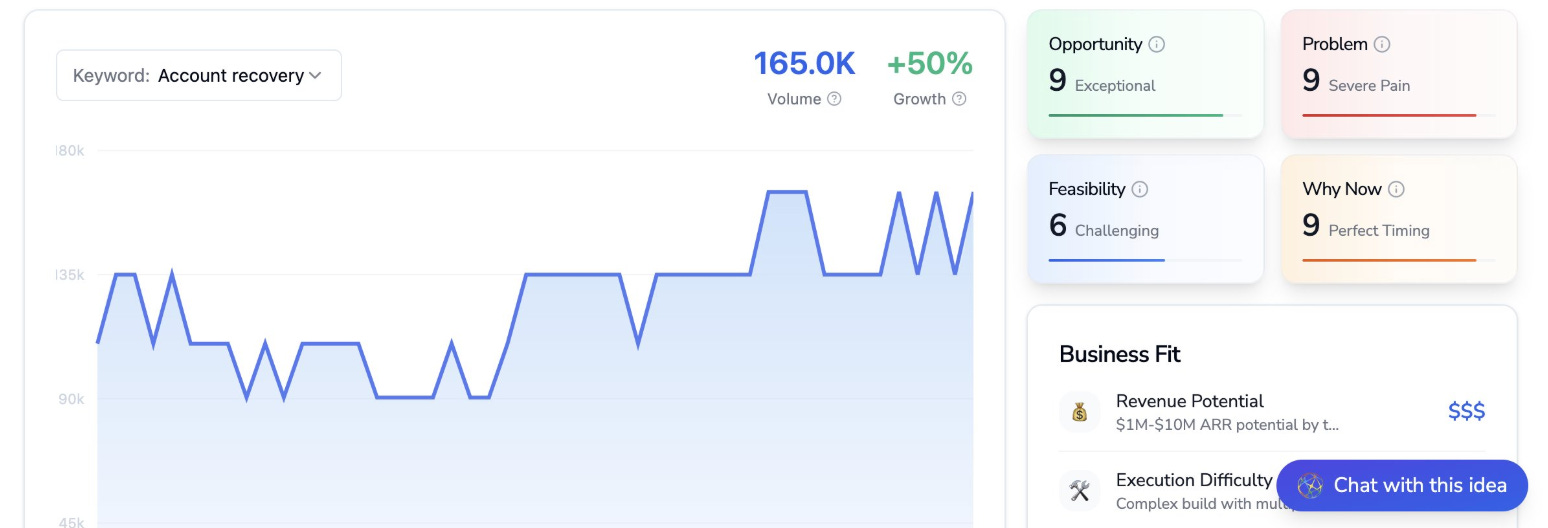
The idea? Creator insurance: pay $29/month to get coverage for income loss during platform bans, legal support for disputes, emergency cash flow, and hands-on account recovery services.
The wedge: full-time creators making $30K+/year who treat their content as a real business. They’d gladly pay for peace of mind. You're not just offering financial protection — you're selling the ability to sleep at night.
Start with Instagram and YouTube, then expand to TikTok, Twitch, and OnlyFans. Partner with creator economy tools (e.g. ConvertKit, Beehiv) and lean into “horror story” content marketing: “Here’s what happened when this creator with 100K followers got banned.”
At 30K subscribers paying $29/month, you're already at $10M+ ARR — and that's before layering in premium services like income diversification planning, content backup automation, or creator-first banking tools.
The platform risk is real. Build the safety net no one else is offering.
Built a “status page aggregator” as a side project — now it makes millions
From a Reddit post where a developer shared how a simple frustration led to a 7-figure SaaS business over 10 years:

In 2013, while debugging an API issue, he realized the problem was on Facebook’s end — visible on their status page
That sparked the idea: a dashboard to aggregate all vendor status pages — so he built a quick internal tool
Eventually launched it publicly as StatusGator, with early traction coming from guest blog posts
Grew slowly over a decade — no hockey stick moment, just daily effort and user feedback
Today, StatusGator monitors 6,000+ services, integrates with Slack, Teams, PagerDuty, etc.
Business now has 6 full-time employees, millions in revenue, and 57% operating margins
His core advice:
Build something that solves your own problem
Talk to customers constantly and adapt
Be patient — most success comes slowly, not overnight
The Samwer brothers made $1.2B by cloning startups — here’s how
From a Reddit-style breakdown of how the Samwer brothers built Rocket Internet into a billion-dollar cloning machine:

In 1998, the Samwer brothers pitched eBay to launch in Germany. eBay said no
They cloned eBay almost pixel-for-pixel, launched Alando, and sold it back to eBay for $43M in 100 days
That success became a playbook: copy proven US startups, localize for Europe or emerging markets
Their venture studio, Rocket Internet, cloned Facebook (StudiVZ), Airbnb (Wimdu), Groupon (Citydeal), and Amazon (Zalando, which started as a Zappos clone)
Each brother is now worth ~$1.2B — built not on originality, but on speed, execution, and aggressive expansion
What we can learn:
You don’t have to invent something new — localizing a proven idea can work
Speed > originality when entering new markets
Distribution > product — the best tech doesn’t always win if it doesn't reach the right users
Running a business looked cool on Instagram. In real life, it gave anxiety and debt
From a Reddit conversation where founders shared the harsh truths of entrepreneurship. On Instagram, building a business looks like freedom. Beaches. Laptops. Vibes.

But in reality? It’s anxiety, maxed-out credit cards, and lonely breakdowns no one sees.
One founder put it perfectly:
“It’s pretending everything’s fine while silently drowning.”
Others chimed in with their hardest lessons:
“I skipped meals to pay my team.”
“Hired friends. Regret it deeply.”
“No one warns you how lonely it gets when sh*t hits the fan.”
“People closest to you become the quietest critics.”
“You WILL face your worst traits—and have to evolve through them.”
One comment hit especially hard:
“You expect friends to be your first customers. Instead, they’re the first to doubt you.”
This thread wasn’t about complaining—it was a collective therapy session for entrepreneurs tired of pretending it’s all easy.
Running a business is rewarding, but the internet rarely shows the parts that make you question everything. (More Here)
💭 YOUR THOUGHTS
🤝 Partnership With US
Partner with us : Get your brand in front of 25000+ readers including founders, indie hackers, side hustlers and aspiring founders.
Thanks for reading today’s newsletter. Stay tuned for more!