


👋 Hi and welcome to today’s edition of Venture Radar where we uncover real internet businesses making real money, and break down how they do it.
Today’s story? Built by two friends from Berkeley, it’s already pulling in over $200K/month within a year of launch.
Let’s break down how this app turned anime fandom into a fast-growing business and why people are paying to make their chats more personal, playful, and emotional.
❓ Where to post, what to say, how to get users - A Marketing guide for Founders.
Built something cool but don’t know how to get users? You’re not alone.
This Marketing for Founders playbook is made for founders, solo builders, indie hackers, and anyone trying to grow without a marketing team or budget.

What’s inside:
Where to post to get traction
Cold DMs + email templates that actually work
SEO, content, and landing page tactics that convert
How to test demand before you waste time building
No theory. No fluff. Just copy-paste strategies and curated tools you can use today.
Get your marketing guide here →
Partner With Us
Get your startup in front of 26000+ readers including founders, indie hackers, side hustlers and aspiring founders.
🧠 Quick Summary
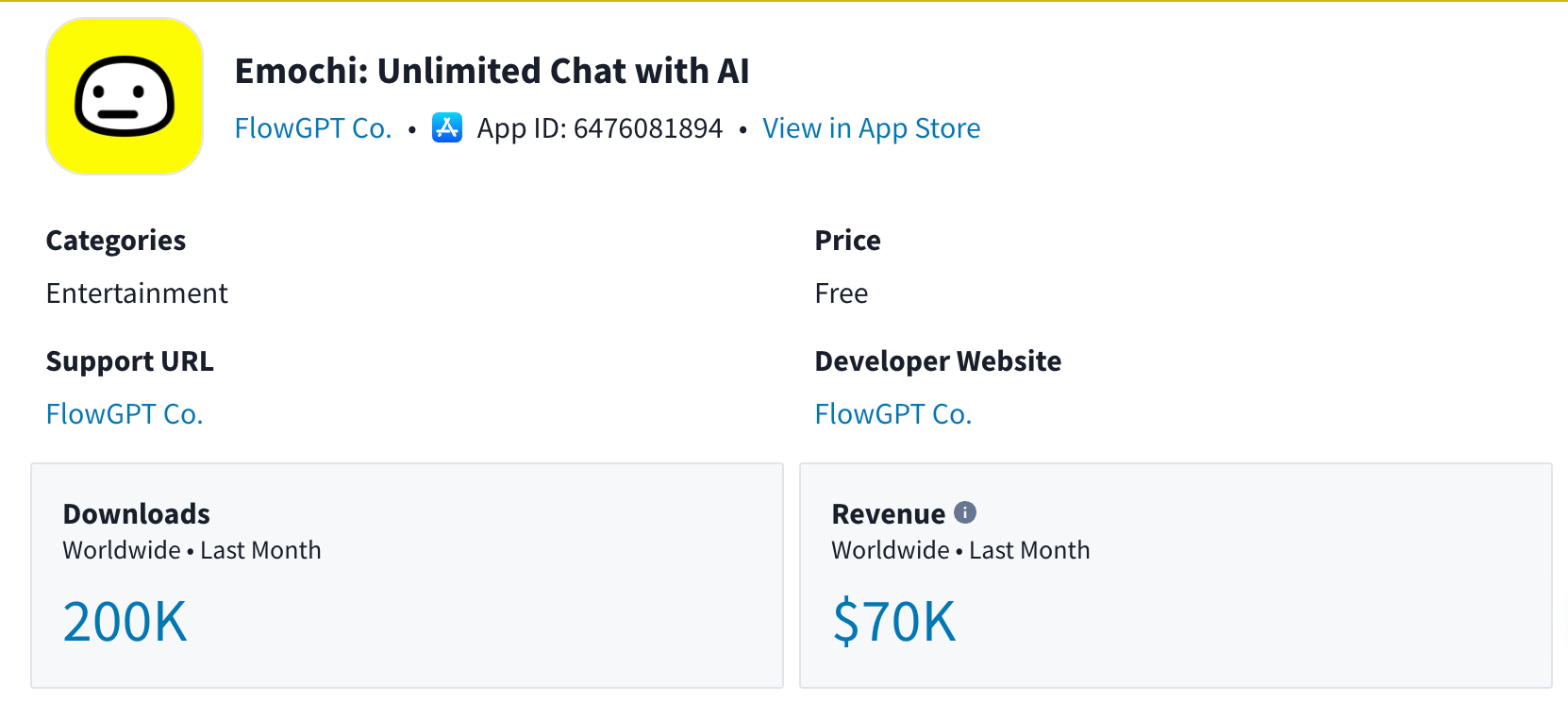
Name: Emochi: Unlimited Chat with AI
What it does: Talk with AI roleplays
Revenue: Within year → $200k+ per month (android + iphone)
Model: Freemium with monthly, and yearly subscription plans
Founded by: Lifan Wang and Jay Dang
Website:App store
📝 What Is Emochi: Unlimited Chat with AI - So what makes
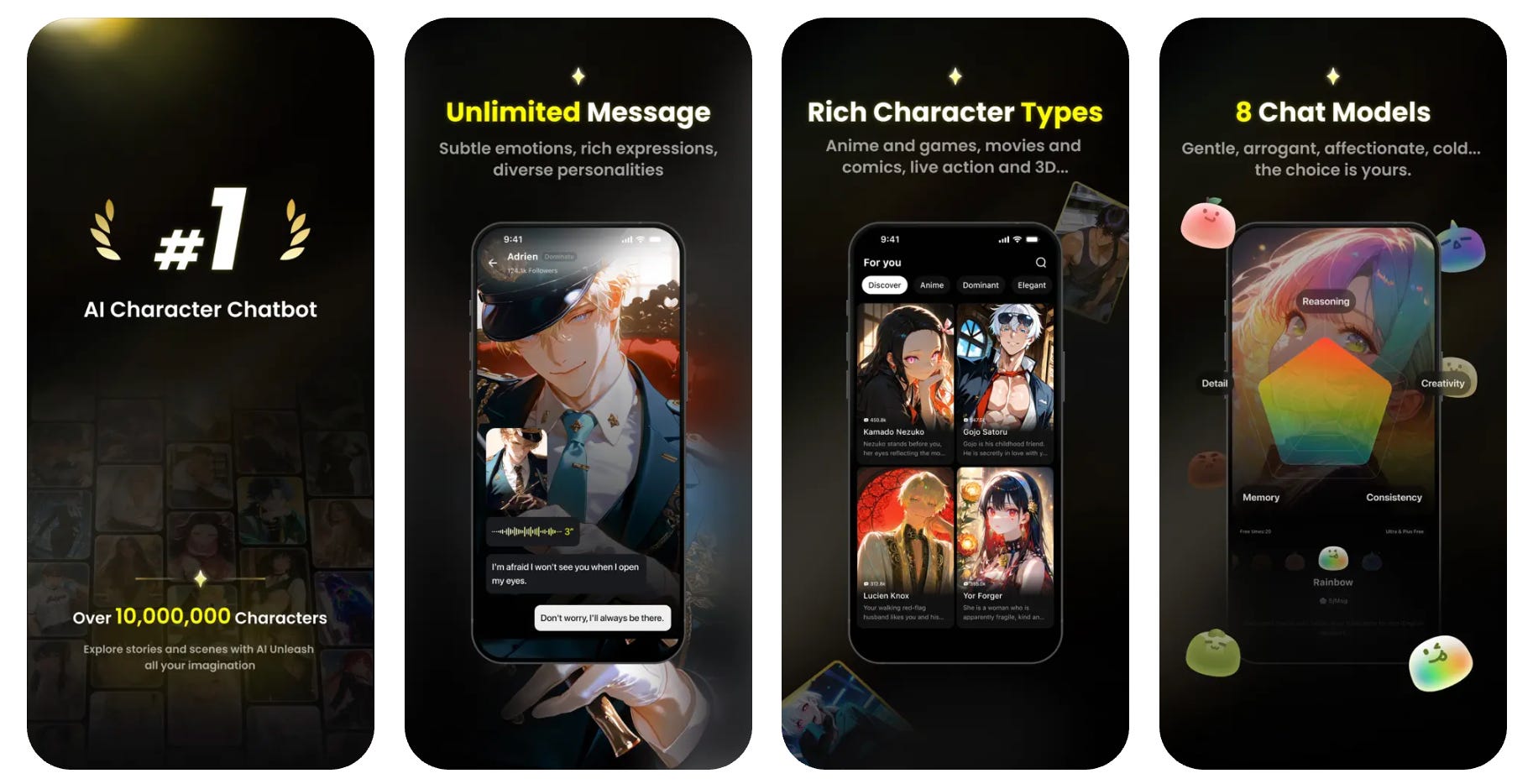
At first glance, Emochi might look like another AI chatbot. But open it up, and you’ll see it’s not built for answering questions. It’s built for creating conversations.
Emochi gives you the power to chat with over a million AI characters from anime, manga, and games or even design your own. Think of it like a pocket-sized multiverse where you can roleplay with heroes, debate with villains, or just hang out with a character you invent in seconds.
The app is part roleplay engine, part social feed. Your characters don’t just talk, they share posts, stories, and updates like real people. And every chat feels alive fun, expressive, and unpredictable. No message limits, no barriers. Just you and an AI companion that adapts to whatever mood or story you want to explore.
If ChatGPT is where you go for answers, Emochi is where you go for adventures.
Here’s what you can do inside Emochi:
Chat endlessly with 1,000,000+ AI characters
Create your own characters with unique traits and backstories
Roleplay in worlds pulled from anime, manga, and games
See your chats come alive with AI-generated images and posts
Share moments and stories like they were part of your feed
🕵️♂️ So, who’s the guy behind Mixy?
Emochi wasn’t born in a corporate lab. It came from two UC Berkeley friends — Lifan Wang and Jay Dang — who were already deep in the world of AI. Before Emochi, they built FlowGPT, a platform where millions share and discover AI prompts. But their late-night obsession with anime roleplay chats planted the seed for something bigger.
They noticed a simple truth:
People didn’t just want AI for productivity.
They wanted companionship, characters, and stories they could actually step into.
ChatGPT was powerful, but it wasn’t playful. Emochi would be.
So they got to work. Nights of coding, endless demo sessions, and quick pivots turned the idea into a real app. Emochi wasn’t framed as “just another chatbot.” Instead, it was built as a universe of characters where:
You can chat without limits.
You can design your own anime-style characters.
Characters post updates, stories, and even generate images.
Every conversation feels alive, expressive, and unpredictable.
The growth story mirrored their builder mindset:
No flashy ads, no celebrity promos.
Instead, they posted fun roleplay demos on TikTok.
They built a Discord community where fans tested features and shaped the roadmap.
They fixed bugs within hours, shipped new features weekly, and listened closely to user feedback.
That approach worked because it was authentic. Emochi feels different not just because of the AI, but because of the people behind it. Two anime-loving founders who didn’t see AI as a sterile assistant, but as a way to create companions, adventures, and worlds you actually want to return to.
📬 Distribution strategy: How they found users?
You might be thinking how they manage to pull over $200k MRR within a short period of time?
They have nailed Tiktok as a distribution channel for their app.
The format is the same one most apps in this niche use:
5–10 seconds long
Comparison with other popular AI chat apps
Shows emochi as the most spicy one
This video reached 1,500,000 million views:
These posts are a bit “weird” but they work really well.
There are endless possibilities to replicate them with small variations so you can post every day.
And it’s a format that I also see as easy to adapt to other niches…
This video reached 400k views:
👨🔧 Why it works
AI chat apps are everywhere right now. But most of them feel like tools — you ask a question, get an answer, and move on. Emochi flipped that script. It works because it taps into something deeper: people’s craving for connection, imagination, and expression.
Here’s why it clicks:
Unlimited, no-friction chatting
Most AI apps gate conversations with tokens, credits, or message caps. Emochi removes that friction. Users can talk for hours without worrying about hitting a limit. That makes it feel more like a relationship than a transaction.
Anime and fandom appeal
Emochi leans into anime, manga, and gaming culture — massive, passionate communities that already spend heavily on digital goods, roleplay, and fan fiction. By giving them a place to interact with characters (or invent new ones), Emochi meets users where they already are.
Personalization = emotional attachment
When users create a character with their own traits, quirks, and backstory, it’s not “just AI” anymore. It’s their character. That sense of ownership keeps people coming back — and makes them more willing to spend on extras.
A social layer that feels alive
Characters don’t just chat; they share posts, stories, and updates like real people. This mimics the dopamine loop of social media but through AI companions, keeping users engaged daily.
Visual rewards
Emochi generates images and snapshots of chat moments, giving users something tangible to save and share. It turns chats into collectibles — a proven driver of retention in fandom spaces.
And why do people pay? Because Emochi monetizes the same way fandoms have for decades: through extras that make the experience more personal and immersive.
Users pay to unlock premium characters or give their own creations more depth.
They buy in-app currency (“Mochi”) to access special roleplay features, visual add-ons, or extra personalization.
They’re essentially paying to make their fantasy world feel richer — just like people buy skins in games or merch from shows.
In short, Emochi works because it doesn’t try to be everything for everyone. It focuses on a core truth: people love stories, characters, and connection. Give them a place where AI can play those roles — without limits — and they’ll happily stick around, and pay, for the magic.
And clearly, it’s working — just look at the numbers.

💡 Build something like this
Emochi proves one thing clearly: people don’t just want AI to be useful — they want it to be personal, playful, and emotional. That’s a bigger opportunity than most founders realize. If you’re thinking about building in this space, here are a few adjacent ideas with massive potential:
AI Companions for Niche Communities
Emochi tapped into anime and gaming fans. But every subculture has unmet needs:
• K-pop stans who want to chat with AI idols.
• Sports fans who want AI roleplay with their favorite teams or legends.
• Historical/educational niches where people “talk” to philosophers, scientists, or authors.Each niche is massive, loyal, and willing to spend on digital experiences.
AI Characters That Live Across Platforms
Right now, most AI companions live inside one app. What if your AI friend could follow you across Discord, WhatsApp, TikTok comments, or even your game sessions?
A “character as a service” model where people subscribe to have their favorite AI persona integrated everywhere they spend time.
AI-Powered Creative Roleplay Worlds
Emochi focuses on one-on-one chats. A big opportunity is shared worlds: multiplayer AI roleplay spaces where groups of friends interact with characters together.
Think Minecraft meets Emochi — a persistent universe with evolving AI storylines.
This could look like collaborative storytelling apps, D&D-style roleplay with AI game masters, or fandom-driven worlds.
Verticalized AI Emotional Support
Emochi thrives on companionship. A serious spin on the same idea is AI wellness companions designed for stress, motivation, or therapy-lite check-ins.
Not replacing professionals, but offering safe spaces for daily venting, journaling, or guided mindfulness with a character users actually bond with.
AI Characters That Earn
Imagine creating an AI persona that doesn’t just chat but generates revenue for its creator.
Fans design characters, others subscribe to chat with them, and creators earn a cut.
This turns AI companions into a platform + marketplace, similar to how Roblox did with games.
The key is this: Emochi nailed one vertical (anime + AI companions) and proved people will not only use it but pay for it. The next wave of billion-dollar opportunities will come from applying the same formula — community + personalization + emotion — to other niches and contexts where people crave connection.
🧐 What you can learn
Emochi isn’t just another AI app — it’s a case study in how to turn a crowded idea (AI chat) into something sticky and monetizable. Here are a few lessons founders can steal:
Pick a niche, not a generic audience
Instead of competing head-on with ChatGPT, Emochi went all-in on anime, manga, and gaming fans — communities that are passionate, loyal, and already spending.
Lesson: In crowded markets, specificity wins. Anchor your product in a subculture that feels ignored by “big” players.
Make it personal and playful
Emochi doesn’t just give answers; it gives characters with personalities, quirks, and backstories. That personal connection makes users stick.
Lesson: Utility alone won’t drive retention. Emotion and personalization turn tools into daily habits.
Monetize where people already spend
Emochi’s users are used to paying for in-game currency, skins, or collectibles. The app mirrored that model with “Mochi” coins and character upgrades.
Lesson: Don’t reinvent monetization. Borrow from proven spending behaviors in your target audience.
Community is the growth engine
Instead of blasting ads, Emochi leaned on TikTok roleplay clips and an active Discord. Fans didn’t just use the app — they shaped it.
Lesson: Build alongside your users. Early adopters who feel heard become your loudest evangelists.
Execution speed matters
From bug fixes to feature requests, the team moved fast. That agility created trust and kept people hooked.
Lesson: In consumer AI, velocity beats polish. Ship fast, listen, and adapt.
📈 Similar businesses on the radar
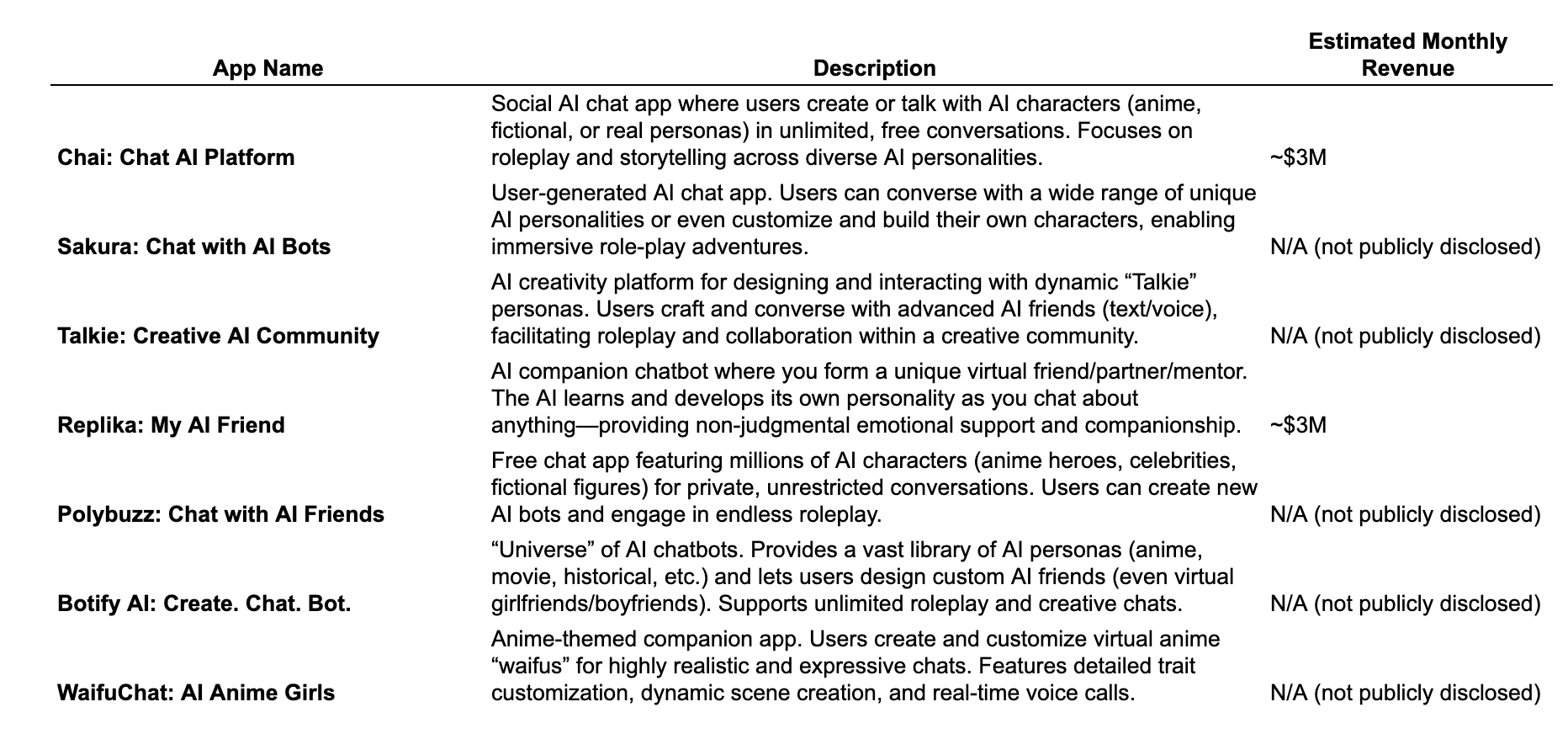
Emochi isn’t alone. A wave of startups are building AI companions because the problem it taps into is huge — loneliness is increasing everywhere.
Surveys show more people than ever report feeling isolated, especially among Gen Z and younger millennials.
Social media connects us, but doesn’t always make us feel understood.
That gap is where AI companions step in — not to replace human relationships, but to give people a sense of presence, interaction, and emotional outlet.
The trend is clear: whether it’s anime companions, emotional check-ins, or roleplay worlds, people are paying for AI that feels less like a search engine and more like a friend.
❓ Would you build this?
🤝 PARTNER WITH US
Reach out 25000+ readers including founders, indie hackers, side hustlers and aspiring founders. Partner with us →
Thanks for reading today’s newsletter. Stay tuned for more!